| When it comes to water damage, a quick and accurate diagnosis is critical to successful remediation. That’s why Emergency Response Restoration offers thermal imaging as part of our emergency response and remediation services.
What is thermal imaging?
Thermal imaging is an inspection and diagnostic tool used in a variety of applications including water losses. This technology is also known as infrared imaging or infrared thermography. It is a non-invasive technique used to produce pictures from the invisible thermal radiation that objects give off. Infrared is defined as an invisible portion of the light spectrum that extends from 750 nm – 1 mm. All objects warmer than absolute zero give off energy within that range. The warmer the object, the brighter it may appear in a thermal image.
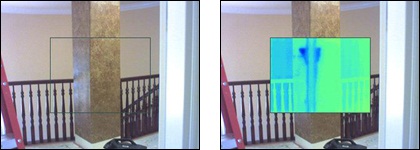
How does thermal imaging detect moisture?
When an object or material becomes wet, its physical properties of heat and cool change. In other words, the temperature of wet material becomes different from the temperature of the surrounding dry material. A thermal imaging camera can detect the temperature difference created by moisture. Visually, the temperature of a wet area appears differently than the surrounding dry area in a thermal image.
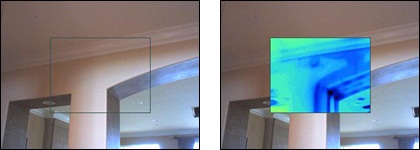
Benefits of thermal imaging
Thermal imaging eliminates material destruction by using a non-invasive method to detect moisture. Benefits include:
- Faster, more complete pictures of water damage.
- More detailed reports of the findings.
- Allows the operator to scan large areas at a time to obtain a more broad-based reading of moisture presence.
- Serves as an invaluable tool for verifying that all water-damaged areas are completely dry at the end of a restoration job.
Training is critical
While operating a thermal imaging camera may seem relatively easy, interpreting the images captured by the camera is a more complicated process and requires special training. We have completed a comprehensive certification course to fine-tune camera operation, learn how to correctly identify images, and to recognize and adjust for factors that can affect thermal readings. |
